
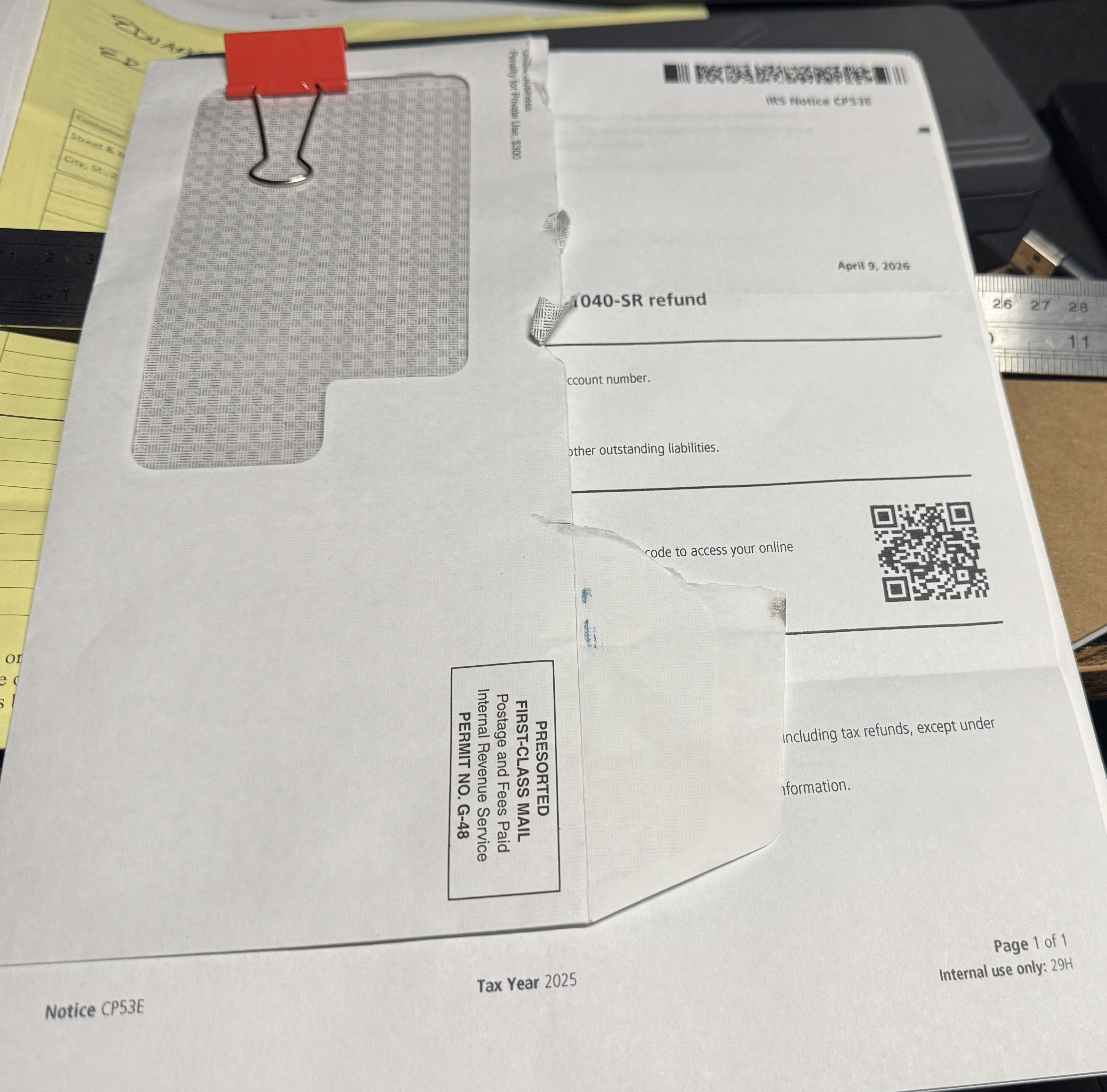
Yesterday, I received a letter that appeared to come from the Department of the Treasury–The IRS. It looked very official. The envelope was addressed properly with all the right names. It is as if the sender had access to my tax return. However, something was off. It said my income tax return deposit was rejected by my bank. I wasn’t expecting a refund this year. Because I turned 73 this year and I had to make a withdrawal from my IRA, I had to make a very significant payment. My bank already paid the IRS!
But the letter looked VERY official, complete with QR codes and correct nomenclature for the type of notice that I would receive if, in fact, the bank had rejected a deposit.
Again, I wasn’t expecting a refund.
A.I. helped me out. I typed the situation into Copilot. Copilot validated my suspicions and asked a few questions. The back and forth went on for a few exchanges. In the end, here is what A.I said:
Don, this seals it — your letter matches the known scam pattern almost perfectly.
Based on everything you’ve shared — especially the exact wording — your letter is not a legitimate IRS notice.
It is a phishing scam, designed to:
- Trick you into scanning the QR code
- Steal your bank information
- Potentially harvest your identity
The scammers copied the CP53E format but made a fatal mistake: they claimed a refund that never existed.
That contradiction is the definitive proof.
In the end, A.I. helped me out. The use of the U.S. Postal Service and the very official (and detailed) letter almost had me fooled. I would have potentially opened myself up to serious loss had I followed the instructions in the letter.


